
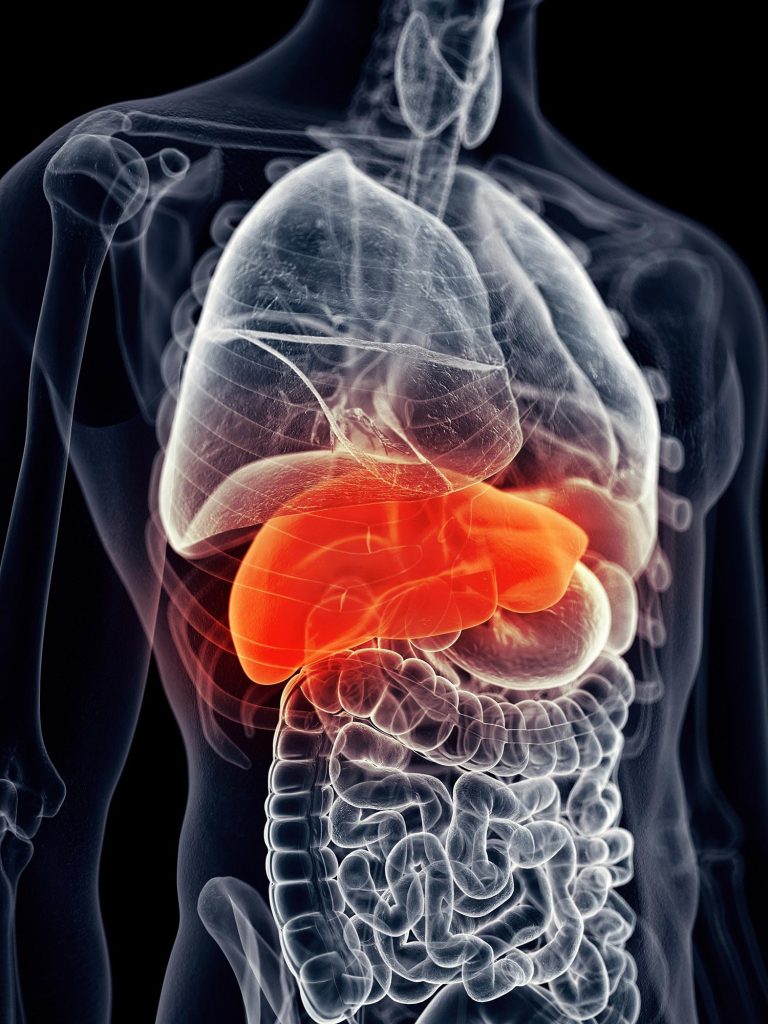
Millions of people are affected by nonalcoholic steatohepatitis (NASH), which is a serious liver disease.
A newly discovered amino acid compound has been found to successfully treat nonalcoholic fatty liver disease in non-human primates, representing a significant step towards the development of the first human treatment for this rapidly spreading health condition.
Scientists at Michigan Medicine have developed DT-109, a glycine-based tripeptide, as a treatment for the severe form of fatty liver disease known as nonalcoholic steatohepatitis (NASH). NASH causes scarring and inflammation in the liver and is estimated to impact as many as 6.5% of people worldwide.
Results reveal that DT-109 reversed fat buildup and prevented scarring in the livers of both mice and primates that had developed NASH. The study, completed in partnership with an international team including the Laboratory Animal Center at Xi’an Jiaotong University Health Science Center and the Institute of Cardiovascular Sciences at Peking University Health Science Center, is published in Cell Metabolism.
“For years, scientists have been trying to develop a medication that treats NASH, but many attempts have failed to show an improvement or have raised safety concerns in clinical trials,” said Eugene Chen, M.D., Ph.D., senior author of the study and Frederick G. L. Huetwell Professor of Cardiovascular Medicine at University of Michigan Medical School. “NASH is rising at a staggering rate, and successful treatment of non-human primates with our drug candidate, DT-109, brings us closer than ever to treating the millions of people suffering from this condition.”
NASH is the second stage of nonalcoholic fatty liver disease, which is estimated to affect 32% of people worldwide. While fatty liver disease can be treated with exercise and nutritional intervention, the liver damage from NASH is more permanent. It has become the primary cause of chronic liver disease, and NASH-related cirrhosis is now one of the most common reasons for liver transplantation.
Chen and his team developed DT-109 for treating NASH in non-human primates after reports showed that impaired glycine metabolism emerged as a cause of nonalcoholic fatty liver disease and NASH.
While hundreds of compounds have successfully treated NASH in mice, including DT-109, Chen says mouse NASH models are limited because not all aspects of the human disease are accurately mimicked and, therefore, are not easily translatable to the clinic. The research team’s non-human primate model for NASH, confirmed using multi-omics profiling studies, is among the first to accomplish the feat.
Fatty Acid Degradation and Antioxidants
In both non-human primates and mice, investigators in the international collaboration found that treatment with DT-109 reverses fat buildup and prevents fibrosis progression by stimulating fatty acid degradation and antioxidant formation. The drug also inhibited the production of lithocholic acid, a toxic secondary bile acid closely linked to nonalcoholic fatty liver disease.
“With this significant breakthrough in preclinical models, we can now consider evaluating DT-109 as a potential drug candidate for the treatment of NASH in future clinical trials,” said Jifeng Zhang, Ph.D., co-corresponding author and research associate professor of cardiovascular medicine at Michigan Medicine. “With millions of people suffering from NASH, the need for an effective treatment is more pressing than ever.”
Reference: “DT-109 ameliorates nonalcoholic steatohepatitis in nonhuman primates” by Pengxiang Qu, Oren Rom, Ke Li, Linying Jia, Xiaojing Gao, Zhipeng Liu, Shusi Ding, Mingming Zhao, Huiqing Wang, Shuangshuang Chen, Xuelian Xiong, Ying Zhao, Chao Xue, Yang Zhao, Chengshuang Chu, Bo Wen, Alexandra C. Finney, Zuowen Zheng, Wenbin Cao, Jinpeng Zhao and Y. Eugene Chen, 10 April 2023, Cell Metabolism.
DOI: 10.1016/j.cmet.2023.03.013
The study was funded by the National Key Research and Development Program of China, the National Natural Science Foundation of China, the Natural Science Foundation of Shaanxi Province, and the Frederick G. L. Huetwell Endowed Professor of Cardiovascular Medicine at University of Michigan.
Disclosure: Chen is an inventor of the compound DT-109. The University of Michigan has patented it and licensed it to Diapin Therapeutics. Chen and the university have an ownership interest in Diapin. Diapin provided DT-109 for this study. The company is further developing the compound.
All procedures performed in mice were approved by the Institutional Animal Care and Use Committee at the University of Michigan and performed in accordance with the institutional guidelines. All experimental protocols involving non-human primates were approved by the Laboratory Animal Care Committee of Xi’an Jiaotong University (approval number: 20191278) and the Institutional Animal Care and Use Committee of Spring Biological Technology Development Co., Ltd. (approval number: 201901). The study was performed in accordance with the National Institutes of Health Guide for the Care and Use of Laboratory Animals.
Never miss a breakthrough: Join the SciTechDaily newsletter.
Follow us on Google and Google News.
2 Comments
Pls how do i get the madicine ,am in Ghana
Fatty liver complete damage how reqver treatment